Measure the space that is actually free
A small desk may have room for two speaker boxes but not for their cables, rear clearance and volume control. Measure around the monitor stand and include the space needed to turn or tilt the speakers. Check whether the model requires mains power, USB power or a separate amplifier. A connector that looks convenient does not by itself explain how the speakers receive both power and audio.
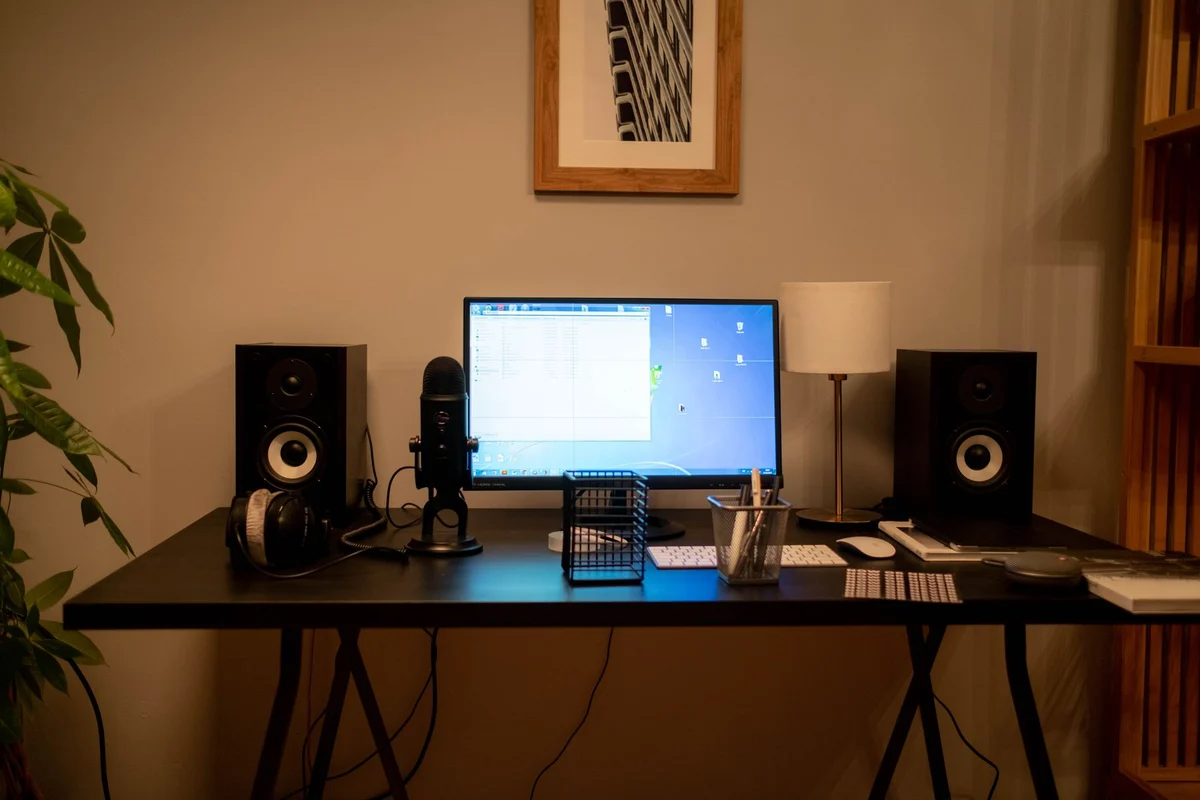
For a stereo pair, start with the speakers at similar distances from your normal sitting position, aimed towards you according to their instructions. Try to keep the left and right sides reasonably balanced. One speaker hidden behind a monitor and the other beside your elbow will not give the same result as a clear pair. Avoid placing an unstable speaker at the edge just to obtain a wider separation.
Listen before buying extra equipment
Play a familiar spoken recording and some music at a moderate level. Check whether voices seem centred and whether either speaker sounds obstructed. Move the pair in small increments and compare. The desk and nearby walls affect what you hear, so a position change can matter as much as an adjustment in software.
Small stands or suitable isolation pads can help aim the speakers and reduce vibration transferred to the desk. They need to be stable and appropriate for the speaker's weight. Do not balance a heavy enclosure on a loose pile of books where a cable tug could pull it down. Follow the manufacturer's intended orientation rather than laying every speaker on its side to save height.
Keep daily controls simple
A reachable volume knob and a clear way to switch to headphones make a desk system easier to live with. Confirm which output the computer selects after sleep or after connecting a headset. Start at a low level when testing a new connection, especially if both the computer and speakers have separate volume settings.
If you use a microphone for calls, check whether speaker sound returns into it. Headphones may be the simpler choice for those sessions even if speakers are preferable for other work. A subwoofer adds another enclosure, cable route and placement decision; it should solve a specific need rather than compensate for badly positioned main speakers. On a crowded desk, a modest pair that fits and remains easy to use may be the more coherent arrangement.