Start with the ports
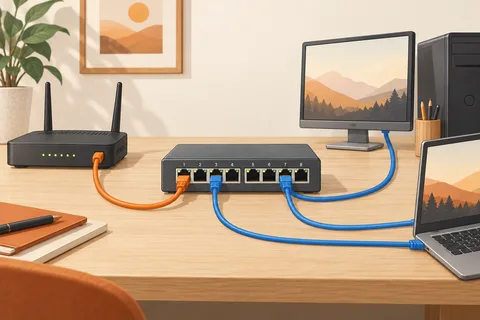
Cable packaging displays categories and large speed claims. Before comparing them, inspect the network ports at both ends. A gigabit router port and gigabit computer interface do not become a ten-gigabit connection through a higher-category cable. The cable must support the link, but cannot add capabilities absent from the devices.
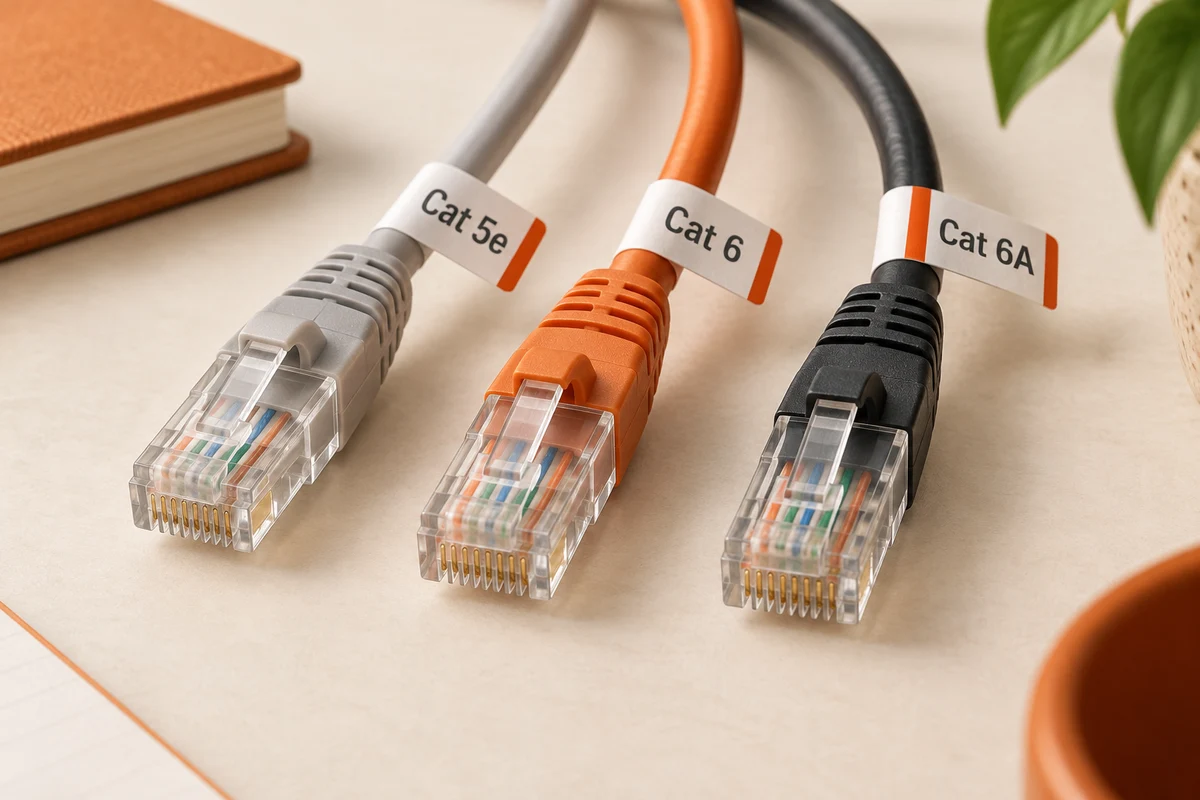
A properly constructed Cat 5e cable can be sufficient for an existing gigabit link. New cabling intended for higher requirements deserves consideration of other categories and the entire installation. Cat 6A, for example, supports 10GBASE-T over compliant channels up to 100 metres. Such statements assume suitable components and correct installation, not any arbitrary assembly of leads and connectors.
Include length and construction
Measure the actual route with a sensible allowance. A short desk lead has different flexibility needs from permanent cabling across several rooms. Avoid severe bends, crushing and tension on connectors. A high printed category cannot compensate for a mechanically damaged cable.
For permanent installations, outlets, connectors and termination work matter too. A good reel of cable does not create a verified end-to-end channel by itself. When opening walls or installing lasting runs, appropriate planning and testing are worthwhile. A basic continuity check does not automatically establish that the channel meets every performance requirement of the intended transmission method.
Separate marketing from specifications
Terms such as Gaming or exceptionally low loss do not explain the category. Look for a clear specification, suitable connectors and an accountable product description. An unusually thin or very cheap lead making extensive promises deserves the same scrutiny as any other product. Colour and decorative braiding are not measurements of network performance.
Shielding is also part of a system rather than a universal quality upgrade. The appropriate arrangement depends on the environment and installation. Avoid accumulating adapters to combine connector types without considering the complete path. For a straightforward desk connection, a suitable, neatly routed standard cable is often easier to understand and maintain.
If an existing link negotiates a lower speed than expected, first compare a known-working cable and suitable port. Record the reported link speed and inspect any adapter or dock as well. Replacing everything with the most expensive category does not explain the cause. What matters is that all parts of the particular route support the intended connection together and keep doing so reliably during ordinary use.