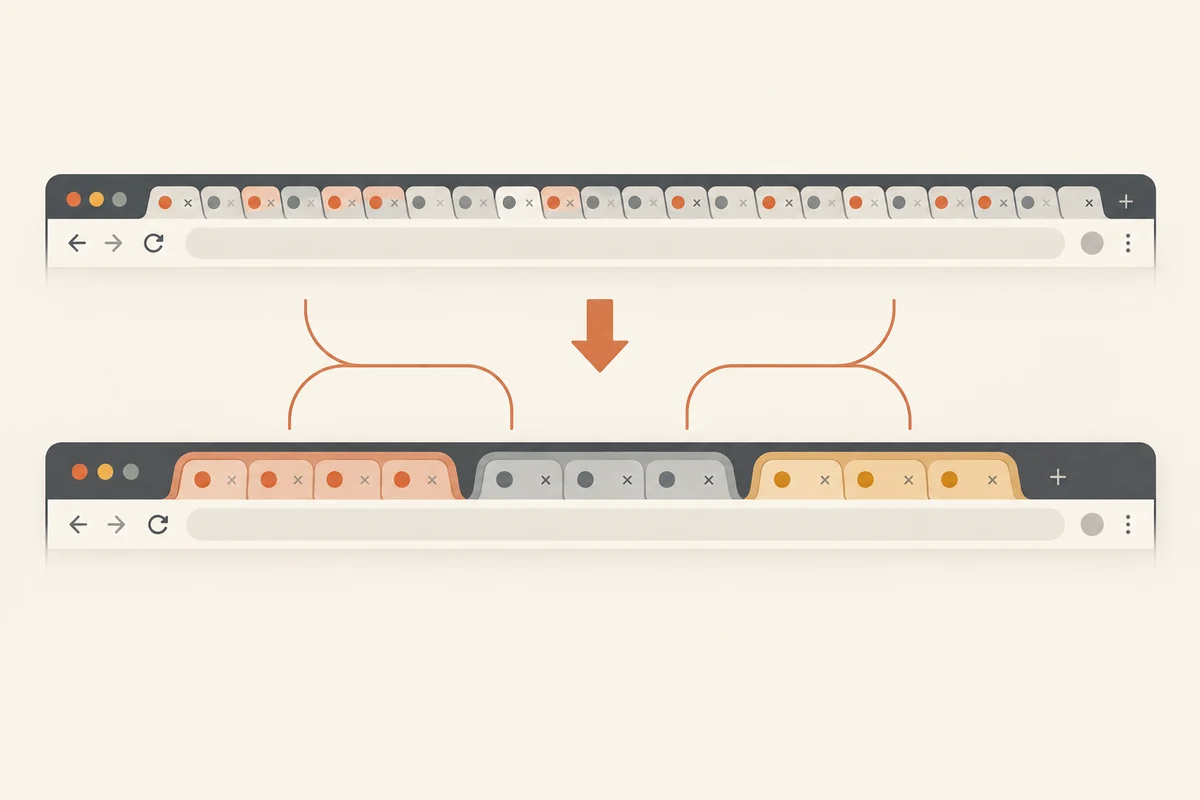
A tab strip can become a pile of unfinished notes
Many open tabs are reminders rather than technical necessities: read this article, compare that product, remember an address. Once their titles become unreadable, the strip no longer serves that purpose well. Separate the current task from material that merely needs to be kept for later.
Start with one browser window. Close completed pages after saving anything required. Put sources for future work into bookmarks or an appropriate note. For an important link, add a short explanation of why it matters. Weeks later, a bare page title is less useful than a sentence identifying the detail you were looking for.
Give groups a specific purpose
If your browser supports tab groups, use one for a bounded activity. Monitor comparison is more understandable than Later 2. It can contain several sources without becoming a permanent archive for everything. Once the activity ends, save its outcome and remove tabs you no longer need.
Pinned tabs suit regularly used services more than one-off research. Limit them to applications whose constant presence genuinely helps your routine. A long row of tiny icons can become as confusing as a long row of ordinary tabs. Changing the presentation does not organise the underlying material by itself.
Protect unfinished input first
Before closing many tabs, look for forms, drafts or uploads still in progress. A bookmark preserves an address, not necessarily unsent content within the page. Save drafts through the service's intended feature. Do not assume session restoration will bring every state back completely after a restart or an unexpected closure.
If the browser feels slow, observe its actual workload too. One demanding service can matter more than many quiet text pages. Browsers handle sleeping or discarded tabs differently. Reducing the visible pile improves orientation but is not automatically a complete performance diagnosis, especially if the same demanding application remains open.
Finish a research session with a brief outcome note: which source mattered, what decision was made and what remains unresolved. Many tabs can then close without losing the work. The next session no longer has to reconstruct an old thought solely from a row of websites. The browser remains a working tool rather than the only record of what you intended to accomplish.